5s
+1
Submission successful!

August 21, 2026

Many people know that excavators can dig, rotate, and move, but they don't know how these actions are achieved. In fact, the excavator's ability to perform various complex movements relies primarily on its hydraulic system to transmit power.
The hydraulic system is like the human circulatory system, and hydraulic oil flows between various components like blood. Today, we'll learn about several core components of an excavator's hydraulic system, their locations, and their functions.
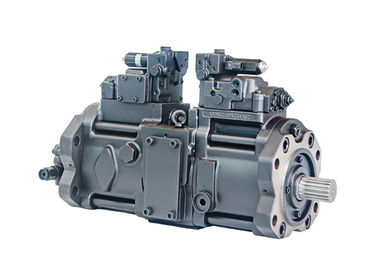
Hydraulic Pump – The Excavator's "Heart"
In the entire hydraulic system, the hydraulic pump is the most important core component. It's usually installed behind the engine and directly connected to it via a coupling. When the engine is running, the hydraulic pump starts working, converting mechanical energy into hydraulic energy to power the entire machine. Simply put, if the engine generates power, the hydraulic pump is the first point of contact for delivering that power to the entire machine.
When the hydraulic pump malfunctions, the entire excavator is affected, for example:
🟠 Slower movements;
🟠 weak movement;
🟠 decreased rotation speed;
🟠 sluggish operation of the working devices.
🟠 Therefore, many mechanics say:The hydraulic pump is the heart of the excavator's hydraulic system.
Main Control Valve – The “Brain” of the Hydraulic System
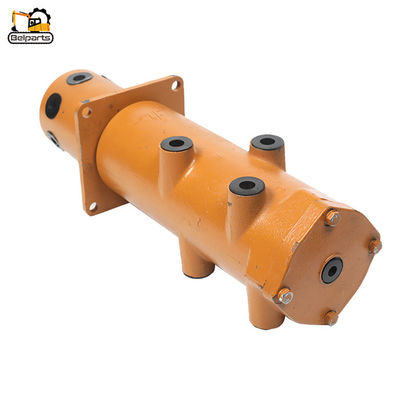
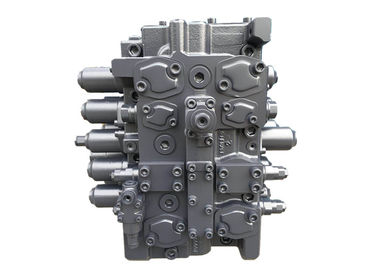
If the hydraulic pump is responsible for generating power, then the main control valve is responsible for distributing that power. The main control valve is typically installed below the cab or between the engine and the cab. The large volume of hydraulic oil output from the hydraulic pump first enters the main control valve, which then distributes the hydraulic oil to different actuators according to the operator's commands.
For example:
✅ Pulling the boom handle → The control valve supplies oil to the boom cylinder.
✅ Operating the swing handle → The control valve supplies oil to the swing motor.
✅ Operating the travel pedal → The control valve supplies oil to the travel motor.
✅ Therefore, the main control valve is also known as:The command center of the excavator's hydraulic system.
Hydraulic Cylinders – Converting Hydraulic Energy into Motion
Hydraulic cylinders are the most easily seen hydraulic components.
A typical excavator has:
✅ Boom cylinder;
✅ Stick cylinder;
✅ Bucket cylinder
When high-pressure hydraulic oil enters the cylinder, it pushes the piston, thus achieving the extension and retraction actions. The excavator's boom raising and lowering, boom extension and retraction, and bucket digging actions are all accomplished by hydraulic cylinders. Although the cylinder has a relatively simple structure, its working environment is extremely harsh,
making it prone to problems such as:
🟠 oil seal aging;
🟠 piston rod scoring;
🟠 internal leakage;
🟠 and external oil leakage.
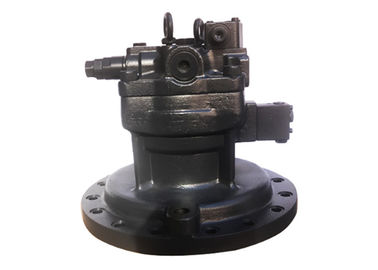
The swing motor—allows the upper body to rotate freely.
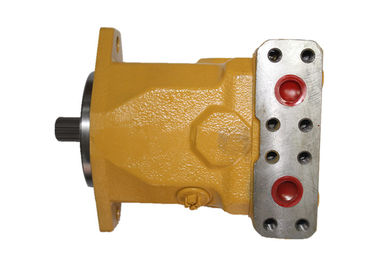
Many people believe that the excavator's rotation is directly driven by the engine, but this is not the case. The swing motion is accomplished by the swing motor. The swing motor is installed in the center area of the upper frame, usually near the cab. When the operator operates the swing handle, the main control valve delivers hydraulic oil to the swing motor. After generating rotational power, the swing motor then drives the entire upper platform to rotate through the swing reducer.
Therefore, the 360° rotation we see is essentially accomplished by:
✅ The hydraulic pump → main control valve → swing motor → swing reducer working together.
The travel motor—drives the excavator forward and backward.
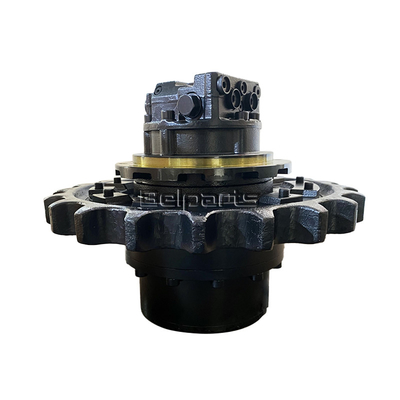
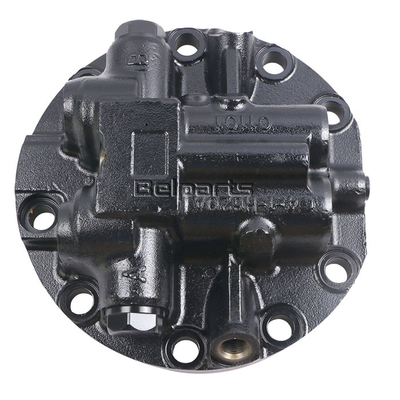
The travel motor is located inside the left and right track drive wheels. Its function is to convert hydraulic energy into rotational power to drive the track movement.
When the operator presses the travel pedal:
✅ The hydraulic pump generates pressure → the main control valve distributes flow → hydraulic oil enters the travel motor → the travel motor drives the reducer → the reducer drives the drive wheel → driving the tracks forward.
This is the entire process of an excavator moving.
The travel reducer—a key component for amplifying power.
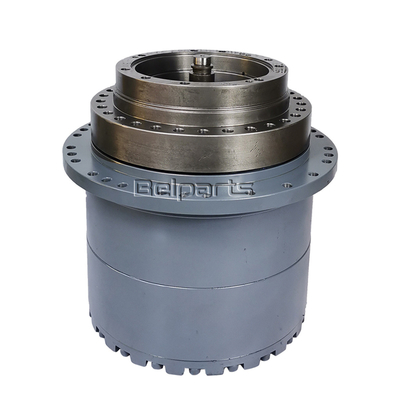
If there were only a travel motor without a reducer, the excavator, although rotating at high speeds, would be unable to move its tens of tons of weight. Therefore, each travel motor is equipped with a travel reducer.
The travel reducer mainly consists of:
✅ a sun gear;
✅ planetary gears;
✅ an internal gear ring;
✅ and bearings.
It converts high-speed rotation into low-speed, high-torque output, ensuring the excavator maintains strong driving force even in harsh environments such as mud, mines, and slopes.
How does the hydraulic system work?
From a power transmission perspective, the entire process is actually very simple:
✅ The engine provides power → the hydraulic pump generates high-pressure oil → the main control valve distributes oil through the circuit → the cylinders, swing motor, and travel motor execute actions → the equipment completes digging, swinging, and traveling operations.
It is the coordinated operation of these core components that gives excavators their powerful construction capabilities.
For maintenance personnel and equipment users, understanding the location, function, and working principles of these core components not only improves equipment management but also enables them to quickly identify problems when malfunctions occur, reducing downtime and increasing construction efficiency.